
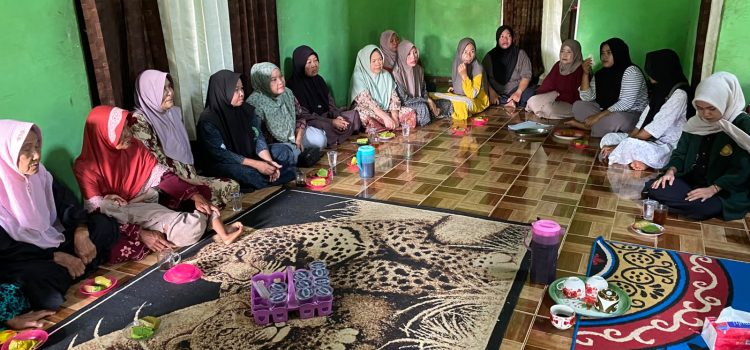
Women farmers in Sungai Rasau Village, Sungai Pinyuh District, Mempawah Regency, are strengthening their role in the village economy through an institutional transformation that they have collectively initiated and managed.
A total of 29 women from the Gembur Bersama and Subur Jaya Women Farmers Groups (KWT) have independently managed a Microfinance Institution (LKM). Through collective deliberation, the two groups have now agreed to transform the LKM into a legally registered cooperative.
The initiative goes beyond strengthening a business institution. Establishing a legally recognized cooperative is expected to provide women with broader and more equitable access to financing and markets, strengthen business sustainability, and reinforce formal recognition of their role in the village economy and local food system.
The transformation is being supported through Peladang (Women Leaders from the Fields), a program implemented by Gemawan in collaboration with the Cooperative Division of the Mempawah Regency DPMKUKMPTSP.
M. Yudi Mauluddin, S.E., from the Mempawah Regency DPMKUKMPTSP, emphasized that the establishment and governance of a cooperative must be based on collective agreement. Organizational rules should not be determined solely by its management but should emerge through deliberation among all members.
“All regulations take effect once they have been discussed with group members and agreed upon collectively. Members play a very important role, as they can also serve as supervisors of the cooperative,” Yudi said.
For the women farmers of Sungai Rasau, the process also creates greater opportunities to participate in economic decision-making. They are no longer involved only in production and business activities, but are also determining how their institutions, resources, and collective enterprises should be managed.
Roni Antoni, Community Organizer for the Peladang program, said the transformation taking place in Sungai Rasau demonstrates the importance of creating space for women farmers to exercise collective leadership.
“When women farmers are given space for collective leadership, a structural shift takes place. They are no longer simply present in farmers’ groups or village deliberation forums — they are taking part in making decisions,” Roni said.
According to Roni, similar processes are also being promoted through the Peladang program in Sambas and Kayong Utara. Across the three areas, the program focuses on three key areas: strengthening women farmers’ leadership within village institutions, developing and managing collective business units, and building cross-village networks to strengthen policy advocacy.
The transformation of the microfinance institution into a cooperative in Sungai Rasau provides a concrete example of this process. The change being pursued is not limited to improving the economic circumstances of individual women, but also seeks to strengthen women’s position within village institutions and decision-making processes.
Through the cooperative, women farmers are expected to gain a stronger institutional platform for managing collective enterprises, expanding access to resources and markets, and building economic sustainability based on collective strength.
The experience of Sungai Rasau demonstrates that when women farmers have the space to lead, manage resources, and make collective decisions, empowerment can move beyond individual capacity building toward a broader transformation in the governance of the village economy.