
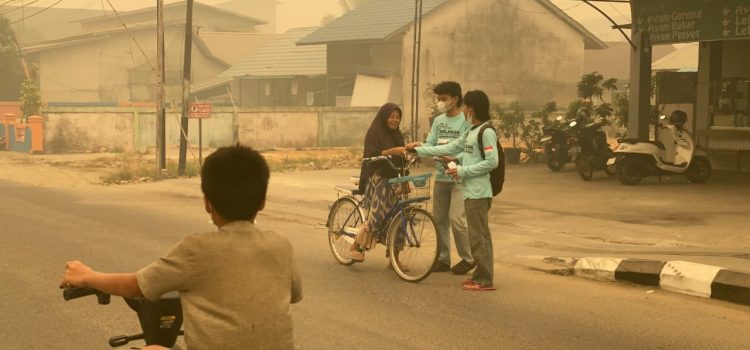
Gemawan, together with the Anti-Fire and Anti-Haze Volunteer Team, carried out a solidarity initiative by distributing masks to communities affected by haze from forest and land fires in Sukadana Subdistrict, North Kayong Regency, on Monday (September 21, 2026).
The initiative was organized in response to deteriorating air quality caused by smoke from forest and land fires over the past several weeks. Approximately 20 volunteers visited several locations across Sukadana to distribute masks and raise public awareness about the importance of protecting themselves from smoke exposure.
During the activity, volunteers distributed approximately 100 boxes of masks to local residents. The assistance is expected to help reduce the risk of health problems associated with smoke exposure, particularly among those who must continue working or carrying out activities outdoors.
According to field observations conducted by volunteers at approximately 12:00 p.m. Western Indonesia Time (WIB) on Monday, the haze remained relatively thick, with visibility estimated at only around 100 meters in several locations. These conditions indicate that the effects of forest and land fires continue to affect local communities and potentially disrupt their daily activities.
Smoke exposure is also a major health concern, particularly for vulnerable groups such as children, older adults, pregnant women, and people with pre-existing respiratory conditions.
Welli Arma, Coordinator of the Anti-Fire and Anti-Haze Volunteer Team, said that the haze in North Kayong Regency had persisted for an extended period and was beginning to affect residents’ daily lives.
“The haze has persisted for more than a month. Almost every day, from nighttime until midday, residents have had to endure polluted air caused by forest and land fires. That is why we, together with Gemawan, took the initiative to distribute masks as a preventive measure to help reduce the risk of health problems associated with smoke exposure,” he said.
According to Welli, the haze is not merely disrupting people’s daily activities but also poses a significant concern for public health. Prolonged smoke exposure requires collective attention, particularly as air quality deteriorates and visibility becomes increasingly limited.
“Beyond disrupting daily activities, prolonged exposure to haze may also increase the risk of health problems, including acute respiratory infections (ARI) and other respiratory illnesses. Therefore, residents need to remain vigilant and take appropriate precautions while air quality continues to be affected by smoke,” he added.
Volunteers urged residents to limit outdoor activities when haze conditions are severe. Those who must go outdoors are advised to wear appropriate masks as a protective measure. Residents were also encouraged to stay hydrated, get sufficient rest, and monitor their health, particularly if they begin experiencing symptoms associated with smoke exposure.
In addition to distributing masks, Gemawan and its network of Anti-Fire and Anti-Haze Volunteers continue to monitor forest and land fires across several areas of North Kayong Regency. These monitoring activities aim to assess conditions on the ground and identify the needs of affected communities.
The volunteers also continue to promote public education on the health risks of smoke exposure and the importance of collective participation in preventing forest and land fires. They emphasize that prevention efforts must be sustained rather than undertaken only when haze has already spread into residential areas.
The ongoing haze serves as a reminder that addressing forest and land fires requires a rapid, coordinated response involving multiple stakeholders. Local communities hope that fire prevention and mitigation efforts will continue to be strengthened so that air quality can improve and residents can resume their normal daily activities.
As of Monday afternoon, haze continued to blanket several areas of North Kayong Regency, particularly from nighttime through midday. These persistent conditions underscore the urgent need to protect public health and bring forest and land fires under control.