
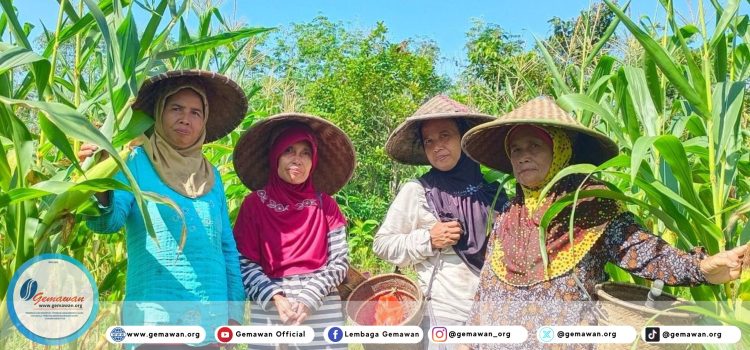
Practices such as planting economically valuable trees in an analog forest system have actually been carried out by us, but we never conducted observations on the types of plants growing on our land, the animals present, nor did we pay attention to the soil structure.
Since its establishment in 2020, the Daun Piawas Women’s Group has experienced significant development. The group’s formation—initially rejected by the members—led to the creation of a black rice demonstration plot, which became the group’s flagship product. Their work in the agricultural sector gained recognition from agricultural extension workers (PPL/BPP), leading to their registration as a Women’s Farmers Group (KWT), and now they serve as implementers of the Analog Forest program with Gemawan. Of course, things haven’t always run smoothly, but they have successfully overcome each challenge one by one.
These challenges included fluctuating member enthusiasm for working as a group, cynicism from the village government toward their activities, and even bans on group participation from their husbands. Yet none of these obstacles dampened their resolve to remain in the group and continue learning.
“For me personally, it is quite difficult to meet once a month because from morning to evening, we always have something to do as farmers. But there is a certain longing to meet with friends. It feels like there is so much we want to share, and this also becomes our time to take a break from our busy lives,” said Aswatiah, Chairperson of the Daun Piawas Group.
In 2024, with support from the International Analog Forestry Network (IAFN), Gemawan involved the Daun Piawas Group as implementers of the Analog Forestry program. This involvement began with an online workshop attended by the group, covering analog forest methodology, implementation, and other technical aspects such as creating physiognomic formulas, conducting ecological evaluations, and mapping.
“Analog forest practices like planting economically valuable trees have actually been done by us, but we never observed what types of plants exist on our land, what animals are present, nor did we pay attention to soil structure. After the workshop, we learned the importance of paying attention to plant strata and recording existing plants because each plant has different functions and benefits. That is one of the key things we learned from analog forestry,” said Nursian, a member of Daun Piawas.
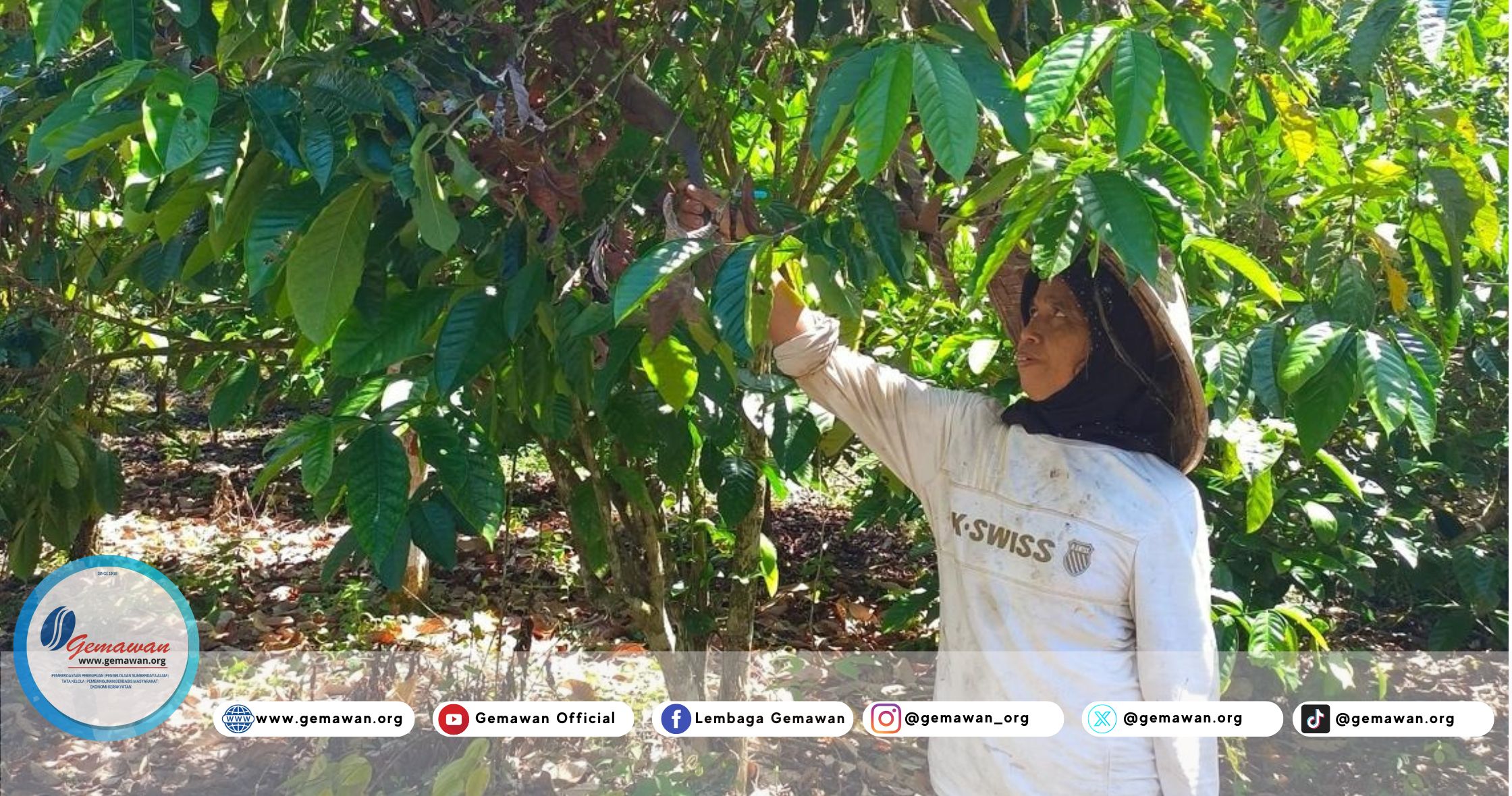
To implement the analog forest program, each member is required to prepare two types of plots: a vegetable demonstration plot (demplot) and an analog forest demplot. The vegetable demplot aims to meet family food and nutritional needs while also serving as a short-term income source. Each plot measures approximately 10×10 square meters, and most are located around their homes. Types of vegetables cultivated include cucumber, corn, eggplant, water spinach, chili, and others. From these demplots, members not only meet their family’s needs but also increase household income. One member even managed to build a kitchen from the proceeds of her vegetable harvest sales.
For the tree demplot, each member provides a plot of land measuring one borong(approximately 1/6 hectare), most of which are gardens they already manage. Through this program, they are adding various types of tree crops, especially fruit trees such as matoa, durian, chempedak, mangosteen, coffee, and others. Beyond serving as “savings,” for them, these cultivated trees are a legacy for their children and grandchildren in the future.
Authors: Wanti A. and Ridho F., Gemawan activists