
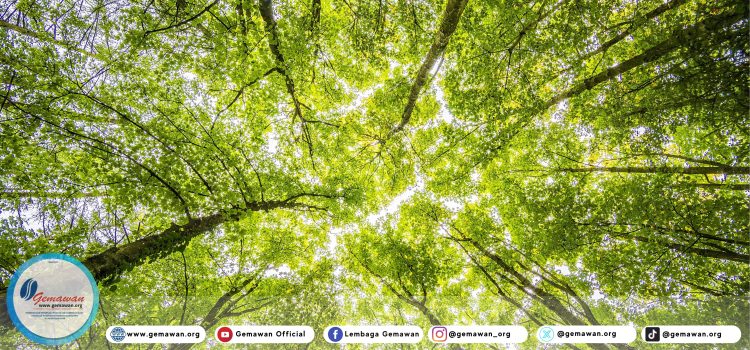
Ever heard of the analog forest? Analog Forestry is a system that seeks to build a forest ecosystem similar in architectural structure and ecological function to a forest approaching the climax or sub-climax vegetation of a native forest. This system also strives to strengthen rural communities, both socially and economically, through the use of varieties that produce commercial products.
As a unique and comprehensive form of forestry, the analog forest aims to maintain an ecosystem dominated by trees, which is also capable of providing marketable products that can support the livelihoods of rural communities, both socially and economically. Currently, a certification system (Forest Garden Products) has been developed to market products originating from analog forests. The FGP label is now also recognized in Europe.
The world’s forest resources are increasingly diminishing due to rising demand for agricultural land and forest products. This growing population has a direct impact on agricultural land. Much fertile land has been converted into farmland, while unsustainable land management systems are used in many areas to meet livelihood needs.
Currently, there is not much forest cover that can be considered ‘natural forest’. Unsustainable agricultural and forestry practices are causing increasing soil depletion, falling groundwater tables, soil and water pollution, and increased dependence on external inputs such as seeds, fertilizers, and pesticides. Furthermore, market dependence on a few major food crops makes farmers more vulnerable to crop failure due to drought, floods and/or pest outbreaks, or to price fluctuations when harvests are stable.
Analog forests can help local communities create sustainable livelihoods. The principle of analog forestry is about how to increase resilience and biodiversity in a landscape by utilizing the natural process of ecological succession (the natural succession from barren land/grassland to climax forest) as a model for agricultural and forestry production.
This model mimics the structure of natural forests, with ecological functions related to an additional emphasis on socio-economically valuable varieties. In this way, analog forests contribute to biodiversity conservation by restoring degraded landscapes, while local communities gain access to sustainable livelihoods.
Creating an Analog Forest
The concept of analog forestry is the idea of Dr. Ranil Senanayake in the mid-1980s. He implemented analog forestry in Sri Lanka through the traditional home garden model (Purana Gama). This initial design was carried out to restore degraded grasslands on the Belipola estate. The concept was implemented by the NGO Neosynthesis Research Center (NSRC). It was later refined and implemented in Guatemala, the Philippines, and Vietnam by Counterpart International and by FURARE in Ecuador.
Although relatively new, in fact, many farmers already have experience in implementing analog forest gardens without realizing it. For example, traditional home gardens in Vietnam have several layers of plants, ranging from the tree layer, shrub layer, annual plant layer, the presence of epiphytes, and climbers. This home garden pattern can also be considered a form of analog forest.
Let’s practice forestry in our own yards.
Source: Analog Forestry: A Practitioner’s Guide, International Analog Forestry Network