

This pocket guide grew out of a small plot of land in Binawarsa Hamlet that was once nearly abandoned but has now transformed into a thriving miniature forest filled with fruit trees, medicinal plants, and vegetables, all planted and nurtured by the women of the Daun Piawas Women’s Group.
Analog forestry draws inspiration from what nature has long demonstrated: a healthy forest consists of multiple layers of diverse plant species that support one another. The journey has not always been easy. As Ngah Wati recalled, there was a time when she felt “there was no longer any hope of growing coffee.”
Yet, one by one, the plants began to grow, and the women gradually rediscovered their motivation. Some no longer need to buy vegetables, while others hope that their children and grandchildren will one day enjoy the benefits of what they have planted.
This guide presents five simple steps: observing a natural forest, comparing it with your own land, identifying and recording plant species, creating a planting layout, and finally, maintaining and monitoring the area. These steps are designed to make the experience in Sagu accessible and adaptable to anyone interested in applying analog forestry principles, whether in a garden, small farm, or home yard.
Our heartfelt appreciation goes to the Daun Piawas Women’s Group for transforming their land into a shared learning space. May the seeds planted in Sagu inspire similar initiatives and take root in other communities.
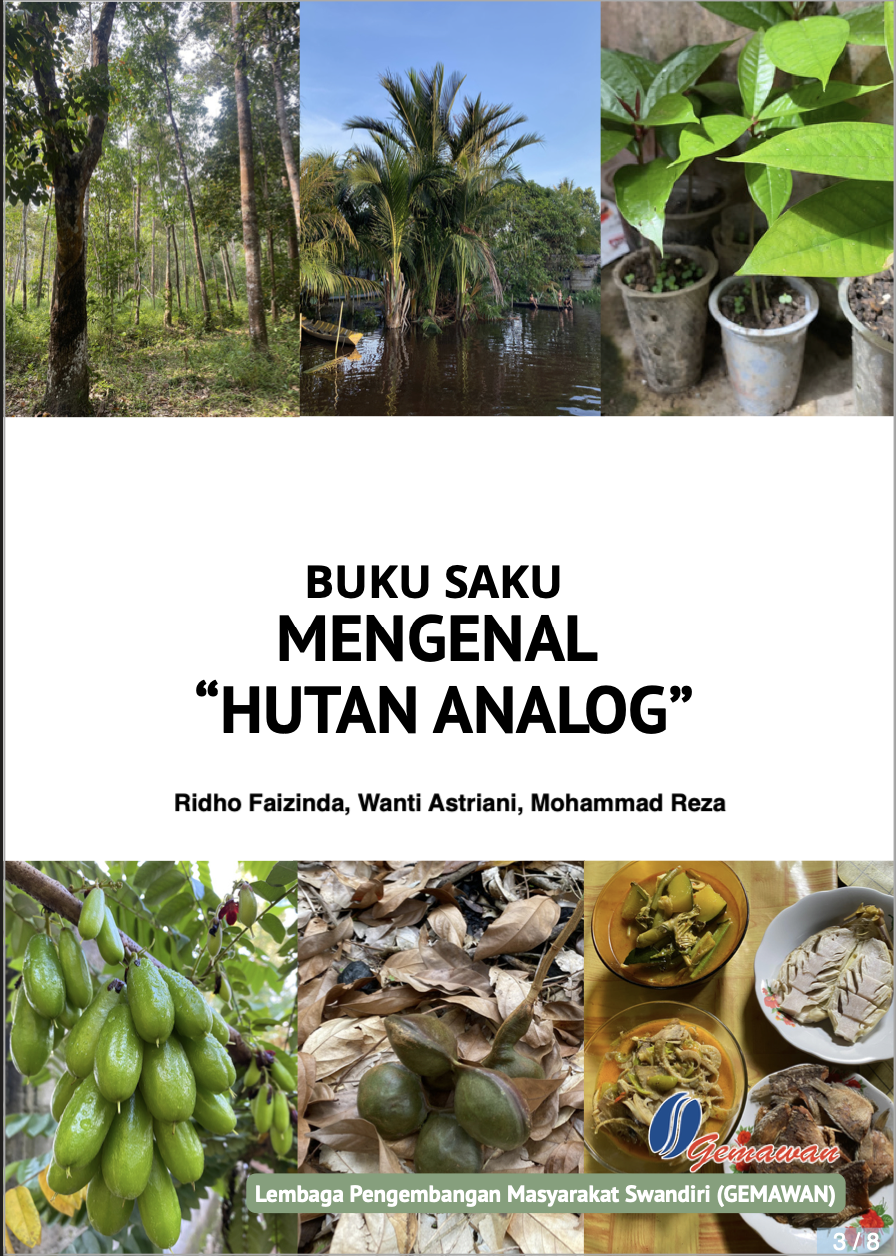
Book Details
Title: Understanding Analog Forestry: A Pocket Guide Original Title: Buku Saku Mengenal Hutan Analog Authors: Ridho Faizinda, Wanti Astriani, Mohammad Reza