
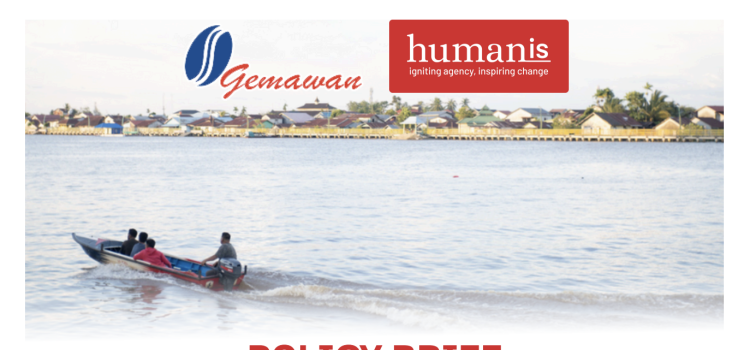
Pontianak, the capital of West Kalimantan, moves like the waters of the Kapuas River that run through it. Its economy grew by 5.03 percent in 2024, and its vision of becoming a center for trade and tourism continues to be promoted. However, there is another story unfolding along the banks of the Kapuas River. It is there that residents of slum settlements struggle daily with floods, dirty water, and endless economic hardship. Slum areas in Pontianak covered 33.51 hectares in 2023, spread across six sub-districts. Although this number has declined compared to previous years, the fundamental problems faced by residents are far from resolved.
The Three Layers of Vulnerability
Research collaboration between researchers from various universities in the Netherlands and Indonesia through the Resilient Indonesian Slums Envisioned (RISE) program reveals that slum residents in Pontianak face three layers of vulnerability simultaneously. The first layer is the vulnerability of setting, which stems from their geographic position. Living on the edge of the Kapuas River makes them annual flood victims. Although rainfall and river discharge tend to be stable, the increase in settlements not matched by proper watershed management has made floods an unavoidable annual problem.
The second layer is the vulnerability of urban systems. Many residents still rely on river water for their daily needs, while for drinking water they collect rainwater. However, rainwater quality is now deteriorating, containing microplastics and other pollutants that can damage long-term health. Sanitation is also minimal. The habit of dumping trash into rivers and ditches, along with minimal plastic waste management, leads to waste accumulation in waterways. Ditches that should drain water become clogged, their capacity is reduced, and floods become more likely to occur.
The third layer is socio-economic vulnerability. Most residents have limited incomes. They choose whatever building materials they can afford to construct their homes, leaving walls and foundations unable to withstand floodwaters. More sadly, even though they know they live in disaster-prone areas, their emotional attachment to their homes and weak economic means make it difficult for them to leave the slum situation. Gradually, floods are seen as ordinary, harmless events. This permissive attitude ultimately hinders both individual and collective preventive and preparedness efforts.
When Government and Residents Move Together
But Pontianak is not entirely without resources. The city government has issued several regional regulations, ranging from Spatial Planning, disaster management, to the prevention and quality improvement of slum housing. Several programs are also already underway. There is a labor-intensive program in four sub-districts of Southeast Pontianak that involves the community in cleaning ditches. The government has also begun constructing a centralized domestic wastewater management system. The mayor’s 100-day work initiative has mobilized mutual cooperation for drainage modernization. The National Slum-Free City Program from the Ministry of Public Works and Public Housing is also ongoing, as is the urban drinking water grant program, although it remains limited by budget constraints.
No less important are the initiatives of the residents themselves. The people of Pontianak have, for generations, had their own way of viewing water management. They call ditches “jalan air” (water roads) and collectively clean them through mutual cooperation. This activity not only maintains the smooth flow of water but also strengthens social bonds and a sense of ownership over their environment. Architecturally, they have adapted by building stilt houses, a long-standing solution proven to mitigate the effects of floods. They also adjust their daily activities to the rising and falling tides, moving belongings to higher ground during high tide and cleaning up after the water recedes. Community groups have also formed. Although they do not directly solve physical problems, social solidarity in facing disasters remains strong.
Building Collective Resilience
From this foundation, RISE researchers formulated three main strategies to build Pontianak’s resilience in dealing with water-related problems. The first strategy is utilizing local knowledge in disaster risk reduction. The community is the main actor in direct contact with their environment, so targeted initiatives must adopt their local knowledge. The second strategy is developing resilient, community-based infrastructure, such as providing access to clean water, safe sanitation, and waste management carried out collectively by the community, adopting existing initiatives while adding new innovations. The third strategy is community economic empowerment. The goal is not only for residents to adapt to environmental problems but to become more empowered by creating additional benefits from solving those problems.
These three strategies require supporting conditions. First, inclusive and risk-based governance, where communities are involved in participatory planning and participatory budgeting. Second, solid funding for the sustainability of disaster prevention and response efforts, so that residents in riverside areas can cope with the impacts of water-related disasters more resiliently. Third, the ability to adapt continuously through processes of linking and learning, because what is considered effective today may not be sufficient to address challenges that emerge in the coming decade.
Two Paths That Must Run in Parallel
From these various strategies, several policy options have emerged. The first option is participatory and community-based. The physical and non-physical revitalization of a thousand ditches through mutual cooperation, participatory mapping of flood-prone areas at the sub-district level, creating communication channels such as WhatsApp groups for disaster updates—all of these can be driven from the grassroots. Community micro-infrastructure such as water absorption areas or biopores and waste banks in each sub-district are also very feasible. Community-based resilient economies can be realized by encouraging micro green economies, utilizing limited land for freshwater fish cultivation, and managing recyclable waste of economic value. Socio-cultural adaptation needs to be integrated into the education sector, instilling environmental values and local disaster mitigation knowledge from an early age. Community disaster alert systems such as forming community-based disaster preparedness groups and providing simple early warning systems like manual sirens or community radio are also part of this participatory option.
The second option is technocratic, continuing existing policies. The mayor’s 100-day work initiative should continue with the modernization of the city’s drainage system through cleaning, widening, and repairing water channels. The urban drinking water grant program needs to continue, providing connections to the municipal water company for low-income communities. The labor-intensive drainage program can be developed not only as temporary work but as a sustainable effort. The government also needs to prioritize the development and repair of basic infrastructure such as local roads, sanitation, and waste management in slum areas. Assistance for renovation or construction of healthy homes with modern stilt designs and moisture-resistant materials could protect poor families from floods and disease. Furthermore, an environmental incentive program needs to be established to appreciate the collective actions of residents who maintain ditches or develop waste banks.
Equally important is synergy with national projects. Participatory initiatives and technocratic projects need to be connected with national priority programs and ministry or agency programs, so they have stronger political support and funding frameworks. The National Slum-Free City Program from the Ministry of Public Works and Public Housing, for example, can be localized with an emphasis on community participation, so the program runs well and transparently.
A Collective Movement in the Face of Crisis
From all of this, several recommendations deserve emphasis. The city government and stakeholders need to develop and agree upon a comprehensive strategy that involves public participation, not only in its formulation but also in its implementation and evaluation. The strategy must include the utilization of local knowledge, the development of community-based infrastructure, and community economic empowerment, with supporting conditions of inclusive governance, strong funding, and continuous adaptive capacity.
Academics and empowerment practitioners need to use the various findings and recommendations from the RISE study conducted between 2020 and 2024. These materials can support policy advocacy, public campaigns and education, community empowerment, and other initiatives. Members of the local parliament, the city government, and other stakeholders also need to consider both participatory and technocratic policy options in a balanced manner.
Pontianak can become an inclusive city, resilient to water-related problems, while continuing to develop as a center of trade and tourism. But all of this is only possible if residents and government move together. Not merely as physical projects, not merely as budget items, but also as a way of caring for the values of mutual cooperation and local wisdom that have long lived along the banks of the Kapuas River. Floods may never disappear entirely, but resilience and togetherness can ensure that residents are no longer just surviving, but rising and thriving.
Author: Mohammad R., Gemawan activist.
Source: Policy Brief “Mewujudkan Kota Pontianak yang Inklusif” (Towards an Inclusive Pontianak)