
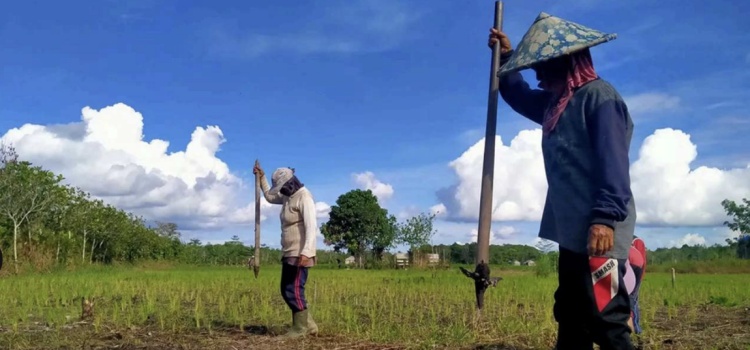
Led by those who are the primary victims of the environmental crisis, women-driven climate initiatives are emerging everywhere, but they still receive far from sufficient financial support. Their access to capital is now more crucial than ever.
Women—who are the main victims of climate change—also hold the keys to its solutions, yet their access to funding remains inadequate to drive large-scale action.
By Charlotte Meyer
It is the fourth largest island in the world. Although Kalimantan represents only about 1% of the Earth’s landmass in Southeast Asia, the island harbors nearly 6% of global biodiversity. The rainforests of Kalimantan, including the Indonesian part of the island, hold extraordinary biological wealth that is threatened every day by human activity and the accelerating pace of climate change.
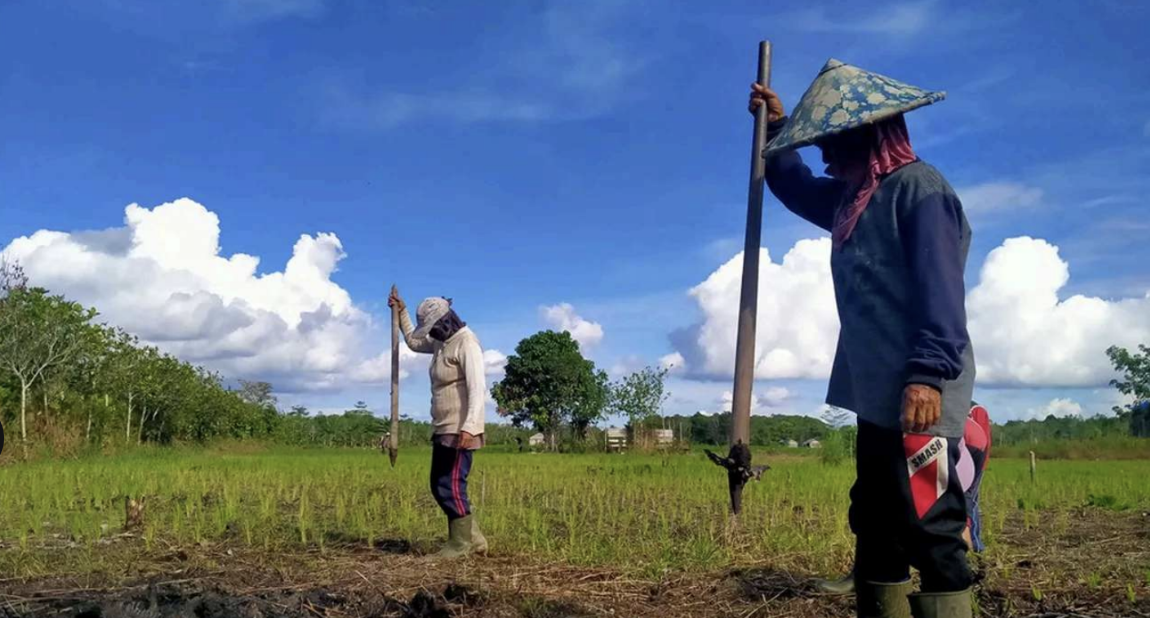
In Indonesia, around one million women farmers cultivate and protect land every day. In recent years, their work has become increasingly threatened by deforestation and the growing frequency of droughts and floods. “They are the ones who hold the solutions, but we are not giving them the means to act,” laments Laili Khairnur, Executive Director of Gemawan.
Since 1999, this local NGO has been committed to strengthening communities in Indonesia, especially in Kalimantan. For a long time, women have been excluded from land rights and access to credit. Because of this, Gemawan works to guarantee women’s access and control over the resources they need to thrive.
“We put gender issues at the center of our work,” explains Ridho Faizinda, the organization’s Deputy Director. “In Indonesia, patriarchy remains deeply entrenched. Our work aims to empower women so they can fully participate in decision-making, including on forest management, and so they can actually benefit from it.”
Rethinking Philanthropy
Since 2023, Gemawan has been working with the Co-Impact Foundation, an international philanthropic initiative based in Switzerland and founded by Olivia Leland, to develop the Kuat Project—kuat meaning “strong” in Indonesian. The project aims to strengthen women’s leadership while promoting sustainable agricultural practices. Opening access to subsidies and legal protection for nearly 300,000 women farmers, helping women entrepreneurs reach markets, and encouraging local governments to allocate part of their budgets to women farmers’ priorities are among the missions carried out by this organization.
“Less than 8% of private development finance goes to feminist movements. Yet some of the most effective organizations we know are led by women,” says Olivia Leland from Switzerland, while advocating for more funding to be directed to women-led initiatives. In 2017, this seasoned philanthropist—who previously worked at the Gates Foundation and on the Giving Pledge initiative—founded Co-Impact for that very purpose.
Disproportionately affected by climate change, women are in fact on the front lines of adaptation and innovation that enable communities to survive and prosper. Co-Impact has chosen to support systemic approaches by providing flexible, long-term funding for at least five years. This approach is made possible through collaborative philanthropy, in which multiple donors pool their financial resources.
Eight years after its launch, the collective now supports 140 initiatives in 35 countries, reaching nearly 800 million people. “Gemawan’s work aims to make women farmers visible and recognized as agents of climate action. That’s exactly what drove us to support them,” explains Olivia Leland.
Co-Impact also supports LTKL, an organization that helps the Indonesian government meet its climate targets while ensuring fair working conditions for women in peatland areas, as well as RySS, an association in India that helps smallholder farmers transition to agroecological practices.
In Indonesia, NGOs like Gemawan are working to empower women farmers, ensure their access to resources, and strengthen their voice in local decision-making.
For Food Sovereignty
According to UNESCO, only 1% of global climate finance goes to women-led organizations. Yet, as Leland points out, many women are leading projects directly or indirectly related to the fight against climate change—“far more than we are able to fund,” she notes.
Laili Khairnur repeatedly stresses this point: “Women are the first victims and also the first solutions to climate change.”
In Indonesia, the close relationship between women and nature is now under threat from the rapid expansion of the palm oil and mining industries. Palm oil plantations in Indonesia grew from 600,000 hectares in 1985 to more than 6 million hectares by 2007. Economic pressures have also forced many young people to leave rural areas. “Families end up selling their land to companies because the younger generation no longer wants to farm it,” laments Laili Khairnur.
By promoting organic fertilizers as an alternative to chemical inputs, Gemawan encourages a more soil-friendly and less costly approach. “Dependence on chemical inputs forces women farmers to spend enormous sums. Reviving local agroecological practices that are part of our culture is the only sustainable solution,” says the Director of Gemawan, who wants to make women farmers’ sovereignty a central political issue.
A Seat at the Decision-Making Table
For Olivia Leland, the key is collaboration. “The solutions already exist. They are being implemented by local women leaders who know what their communities need. Our role is to empower them so they can act at scale.” She also emphasizes the importance of storytelling: “The biggest challenge is telling these stories of transformation so that donors understand why it makes sense to invest in these organizations.”
In Kalimantan, this investment is already starting to bear fruit. For Laili Khairnur, working in a partnership project with Co-Impact makes it possible to be more effective across the region. In addition to adopting new sustainable practices, women are gradually gaining access to decision-making bodies. Whereas previously they filled less than 15% of leadership positions in village governments in Indonesia, legislation now requires that 30% of village representatives be women. Yet for Ridho Faizinda, “this is still far from reality. Because our region is so vast, elections are very costly, and women do not have sufficient financial means to run.”
Concerned about shrinking freedom of expression and the increasing marginalization of local NGOs, Laili Khairnur calls for direct access to funding for community organizations: “World leaders will not be able to confront the climate crisis without the knowledge of women and Indigenous communities. This movement has to start locally and then become a global movement.”
Meanwhile, Leland remains “deeply optimistic”: “Every time I am with these women, I feel hopeful. If we want a sustainable future, women’s leadership must be placed at the heart of the fight against climate change.” After COP30, the main challenge will be to channel funding directly to those who are already implementing solutions on the ground.