
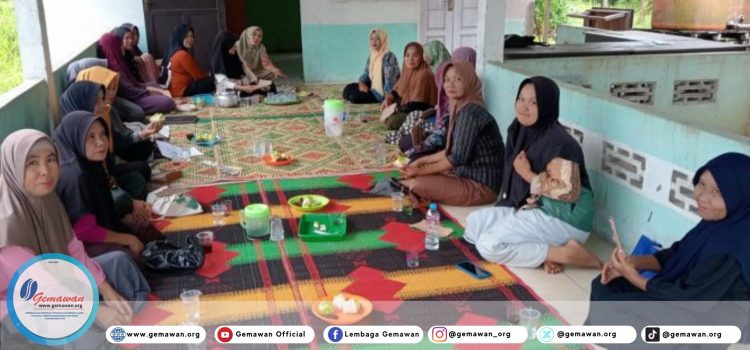
Concrete steps toward the economic empowerment of women have once again been realized in the Galing District area, Sambas Regency. Held at the Sagang Hamlet Village Polindes (village birthing post) on Tuesday, June 8, 2026, a meeting was conducted to establish a women’s cooperative named KSP “Tri Kembang Sejahtera.” This activity marked an important moment for the creation of an economic body managed entirely by women, aimed at developing business potential and achieving economic independence for the local community.
The formation process was attended by 20 founding members, comprising a combination of two active women’s business groups in the area: the Sri Kandi Group and the Serai Wangi Group. The presence of all members demonstrated a spirit of unity, togetherness, and seriousness in coming together under a more structured organizational body beneficial to shared welfare.
The formation meeting was officially opened and directly chaired by Mrs. Nurhayati as the Chairperson of the meeting. In her opening remarks, she expressed great hope that the existence of this cooperative would become the economic backbone of families, as well as a vehicle capable of accommodating aspirations and developing the potential of women’s resources in Tri Kembang Village. Throughout the entire meeting process, from the opening, discussion of agenda items, to decision-making, the activities ran smoothly, orderly, and in a familial manner, thanks to the assistance and facilitation provided by Community Organizer, Siti Rahmawati.
During her presentation and explanation, Wati, as she is commonly called, outlined the basic principles of cooperatives, the objectives, and the benefits of joining a cooperative. Through in-depth discussion and deliberation among all members, it was mutually agreed that the Tri Kembang Sejahtera Cooperative would operate in the savings and loan business sector. This type of business was chosen as it was deemed most suitable to the real needs of the members: helping provide business capital, facilitating access to finance, and building saving habits and better family financial management.
Strengthening Group Economy
“The savings and loan cooperative is the primary choice because its basic principles are mutual assistance and mutual benefit for all members. Funds collected from our own members will be managed and rotated for our collective benefit, so the benefits can be directly felt by all members and their families,” explained Wati in her presentation before the meeting participants.
After the business type was determined and agreed upon, the meeting proceeded with the election of the Board of Management and Board of Supervisors who would be responsible for managing, developing, and overseeing the cooperative’s future operations. Based on the results of deliberation and consensus, the following is the elected structure of the Management and Supervisory Board for the Women’s Cooperative “Tri Kembang Sejahtera”: Board of Management — Chairperson: Mrs. Julida, Vice Chairperson: Mrs. Ningsih, Secretary: Mrs. Annisa, Treasurer: Mrs. Netty; while the Supervisory Board — Chairperson: Mrs. Rahmawati, Secretary: Mrs. Nurhayati, Member: Mrs. Norma.
In addition to the election of management, the meeting also established provisions regarding the cooperative’s initial capital, all sourced from member contributions, divided into three types of savings: Principal Savings — agreed at Rp50,000 (amount each member must deposit upon first registering as a member); Mandatory Savings — agreed at Rp10,000/month (regular dues paid periodically as a form of active participation and membership obligation); and Voluntary Savings — agreed at Rp5,000/month (funds deposited by members based on their respective abilities and wishes, beyond the principal and mandatory savings obligations). The establishment of these three types of savings provides a strong foundation for the cooperative to have sufficient, sound, and sustainable working capital in the long term.
With the official establishment of the “Tri Kembang Sejahtera” Savings and Loan Cooperative, it is hoped that this organization will continue to grow and develop, improve the standard of living and welfare of all its members, strengthen family economic resilience, and actively contribute to advancing the overall economy of Tri Kembang Village. This cooperative is also expected to serve as an example of successful community-based economic management led by resilient, independent, and cooperative women. The event concluded with the signing of the cooperative formation minutes by all participants as proof of initial legal establishment and a shared commitment to develop the cooperative for the welfare of its members.
Author: Siti Rahmawati, activist at Gemawan.