
“This empowerment and ecosystem conservation scheme was deliberately designed together so that aquaculture activities can go hand in hand with coastal rehabilitation. Mangroves continue to grow, while communities gain tangible economic benefits.” (Lani Ardiansyah)
Continuing efforts to restore coastal ecosystems through mangrove planting using bamboo sleeve methods, Kitabisa.org has once again strengthened its strategic collaboration with Gemawan and Crustea. This partnership is realized through the implementation of the MangSilvo (Mangrove Silvofishery) program, which aims to promote local community sovereignty in the sustainable management of natural resources.
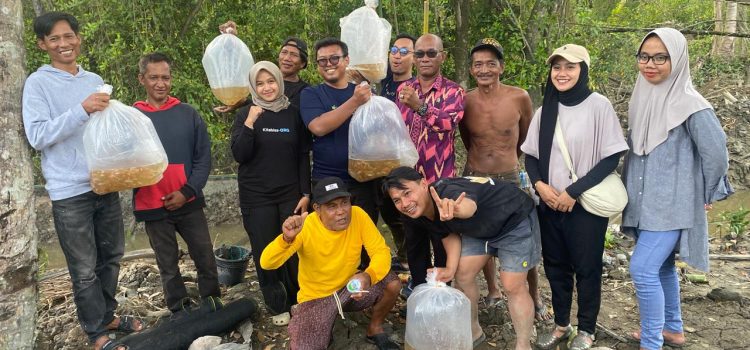
The MangSilvo program was carried out in Bakau Kecil Village, East Mempawah Sub-district, Mempawah Regency, on Thursday (January 22, 2026). The initiative integrates mangrove conservation with the economic development of coastal communities through the cultivation of saline tilapia, shrimp, and crabs within a single, integrated management system.
As an initial phase, this multi-stakeholder collaboration has completed the construction of a three-compartment pond system and released 1,500 juvenile saline tilapia. Designed as a long-term initiative, the program will continue in February with shrimp and crab cultivation, combined with mangrove seedling planting along the edges of the pond canals.
“This empowerment and ecosystem conservation scheme was deliberately designed together so that aquaculture activities can go hand in hand with coastal rehabilitation. Mangroves continue to grow, while communities gain tangible economic benefits,” said Lani Ardiansyah.
Protecting Nature, Strengthening Economic Sovereignty
For Kitabisa.org, the MangSilvo program is not merely about physical pond development. It represents recognition of, and support for, the sovereignty of coastal communities—particularly the Bakau Jaya Group, which has consistently protected coastal areas as a natural barrier against abrasion and environmental degradation.
“This program is rooted in the belief that environmental protection cannot be separated from the welfare and dignity of the people who live within it,” said Ucup, a representative of Gemawan.
According to him, MangSilvo holds clear strategic value for coastal communities. From the perspective of alternative economic sovereignty, silvofishery ponds provide a practical solution for fishermen during extreme weather conditions such as strong winds and high waves. Through this scheme, communities gain an independent source of income that does not rely solely on going to sea.
From an ecosystem resilience standpoint, mangrove planting within pond areas strengthens the village’s ecological structure, prevents coastal erosion, and creates natural habitats for various aquatic species. This integration of conservation and production is expected to serve as a replicable model for sustainable coastal management in other regions.
“Through the MangSilvo program, Gemawan and its partners reaffirm their commitment to fostering multi-stakeholder collaboration in protecting the environment while strengthening the economic resilience of coastal communities in a fair and sustainable manner,” he concluded.
At the same occasion, Sofie, a representative of Kitabisa.org, emphasized that Kitabisa’s involvement in the MangSilvo collaboration is part of a shared effort to ensure that program benefits are truly felt by fishermen and their families.
“We designed the MangSilvo program as a collaborative model that focuses not only on environmental conservation but also on tangible and sustainable empowerment of coastal communities,” she said.
Meanwhile, Dzaky, representing Crustea, explained that the program goes beyond economic stimulation. It also serves as a pathway for applying tactical and technical scientific knowledge in a way that is accessible and sustainable for local communities.
Source: Dialektis
Image: Canva